

It’s that weird time of year in the horse breeding world: Foal Inspections. Or, as those of us with no sense of decorum call it, Toddlers and Tiaras season.
I get that there, are and should be, standards for purebred animals. Otherwise some idiot might mix a Great Dane with a Poodle and call it Greatdoodle and charge $5000 for it. Just kidding, no one would want that.
Unless it’s already been done. Then it’s still a stupid idea.
Everything from Lionhead bunnies to Bactrian Camels has very strict breed regulations. So it’s no surprise that different types of horses do too. Arabians have certain requirements, Quarter Horses have others, and Paso Finos have their own specifications.
To be registered in the Jockey Club and therefore eligible to race, Thoroughbreds must be live covered which means that the mare and stallion actually do the deed. With witnesses.
(Almost every other breed, including all Warmbloods relies on artificial insemination. It’s so much fun waiting at airport cargo terminals late at night to pick up semen straws packed and shipped as carefully as transplant organs. The cargo handlers always eye me suspiciously when they hand over containers marked “FRESH SEMEN.”)
I don’t understand breed standards other than some for Thoroughbreds and Warmbloods, specifically Oldenburgs. Even so, I only comprehend bits of the Oldenburg Horse Society (aka GOV) rules, because they are written in German. (Google translator was hilarious and not helpful in this regard.)I wouldn’t even know that much, but I’ve had two homebreds. Three if you count Cooper, who is only mine emotionally.
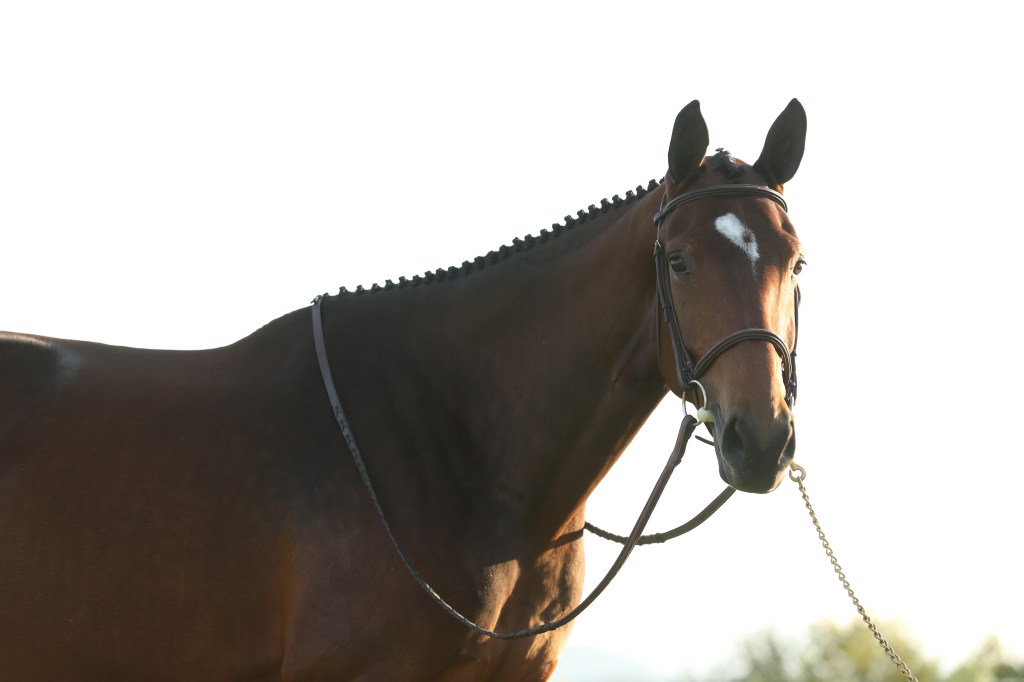
Each foal going through Inspections gets judged and rated on conformation and movement. In theory they are also evaluated on how well they are built for the job they were bred to do: jumpers, eventing or dressage. (They are supposed to also consider hunters, but the Germans don’t show hunters and are pretty clueless about them.) Most judges are specialists in a single division. So if you have a foal bred to be a jumper being evaluated by a dressage judge it might not go well.
Dressage is not my thing. See where I’m going here? Story of my life.
This year the GOV approval season in the US and Canada runs between August 4 and September 22. In other words, right now.
The horse version of Toddlers and Tiaras came to my little portion of the world on Monday.
The foals are between four and six months old and still with their mothers. Imagine Mama June on stage with Honey Boo Boo. That helps make it a full-on spectacle. Occasionally it’s also a shit show.
Before the presentation, it all starts with the horses. Foals are naturally more gorgeous than any four-year old child wearing more make-up than Tammy Faye, but a little zushing up never hurts.
So they all get spa treatments. There are pedicures, baths, and manes braided all to impress the judges with clipboards and German accents. (This year there was a, gasp, American judge.)
Monday’s inspection featured ten pairs of mares and foals. It was loud. It’s always loud. The foals scream because are away from home and separated from each other. The mares may be agitated by strangers coming up and fussing with their babies. (Or not. Some of the mares are sick of their foals and are grateful for anyone, or anything that keeps the little monsters busy.)
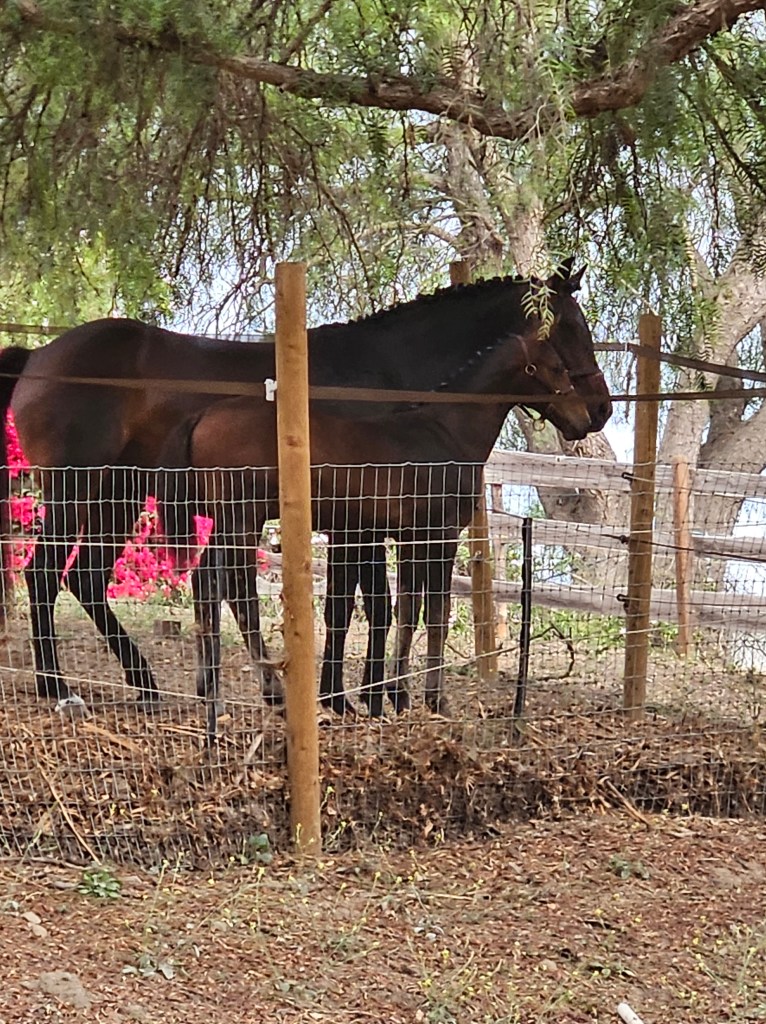
Full disclosure: Layla was out of sight of the other mares and screamed constantly from the moment she got off the trailer until when she went back in the field. She settled when I hung out with her. But I couldn’t stay all day, so who knows what she did when I left. But I can imagine.
It takes a lot of work to get the foals in pageant- ready shape. Many have been living in fields, so they look scruffy. Hopefully the foals have shed their baby fuzz, but sometimes they look a bit moth- eaten. They also have the nicks and cuts that inevitably come from living in a group of horses.
At Three Wishes Farm, foals where my babies grow up a baby whisperer starts work when the foals are barely a week old. They are handled, haltered, brushed and learn to pick up their feet politely. My job is spoiling the little buggers and playing with them constantly. Sometimes I overdo it. Sorry, not sorry!
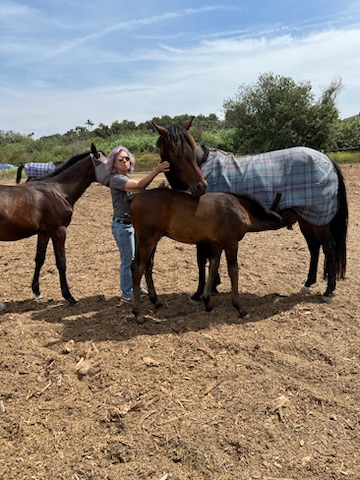
That isn’t the case for a lot of the foals. A lot of them are practically feral. Some have never been brushed, bathed or worn a halter. They don’t know how to lead. That works out as well as can be expected.
At our place, the day before the Inspections looks like backstage at Little Miss America. All the horses get a bubble bath and their manes braided. The broodmares are usually retired show ring superstars, so for them, this is just another day. They practically sleep through the whole thing.
The foals, not so much. Not only are all their manes more like mohawks than manes, but they aren’t used being braided. Cue more screaming, wiggling and temper tantrums.
Eventually everyone is for their close-up. The arena has a tent in the center where the judges hang out. Banners line the ring walls, and the ground is freshly dragged. Outside the ring is a viewing area with risers where the breeders, owners, future trainers and interested outsiders can sit and watch. I usually hang out by the portable rail that separates the judging area from the staging section of the ring.

The Inspectors are (usually) German men sporting crisp, clean, white uniforms. One or two stand safely in the center with clipboards and pens barking orders. On cue, the handler holding the mare starts to run. If all goes well – and it sometimes does- the mare trots off and the foal, who is loose, trots along with them both, showing off its way of going. That’s mostly a fantasy.
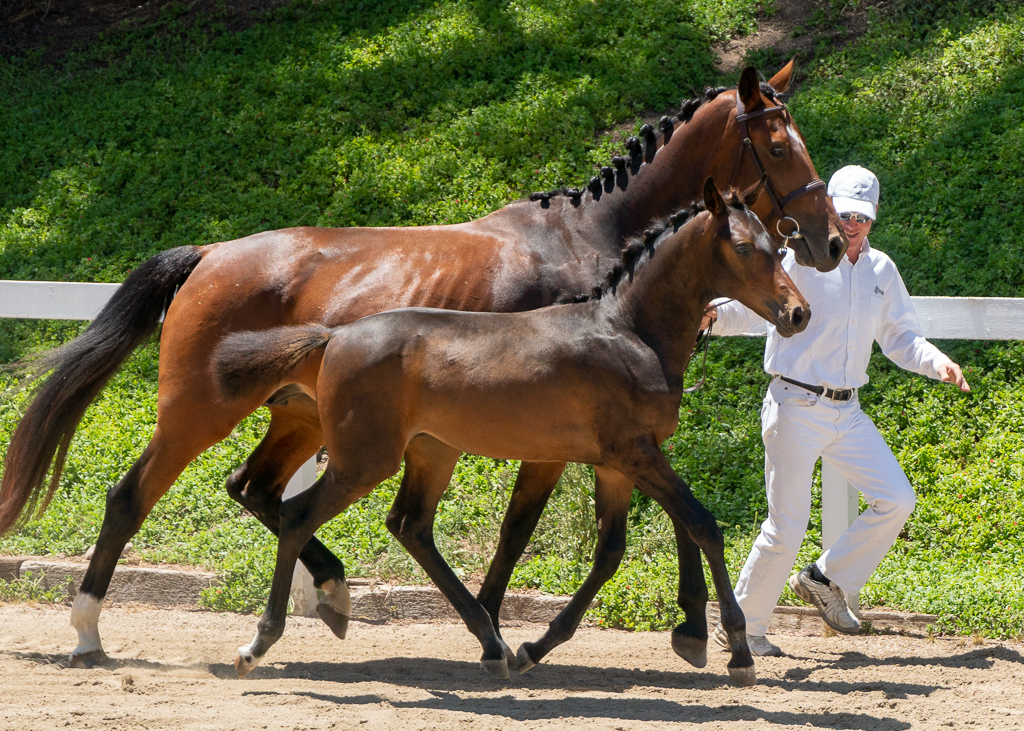
More often the foals zig and zag around the ring, kicking or mowing over the mare’s handler. Sometimes they stop, and then race after its mom in a full gallop. Then they notice the crowd. Some are terrified.
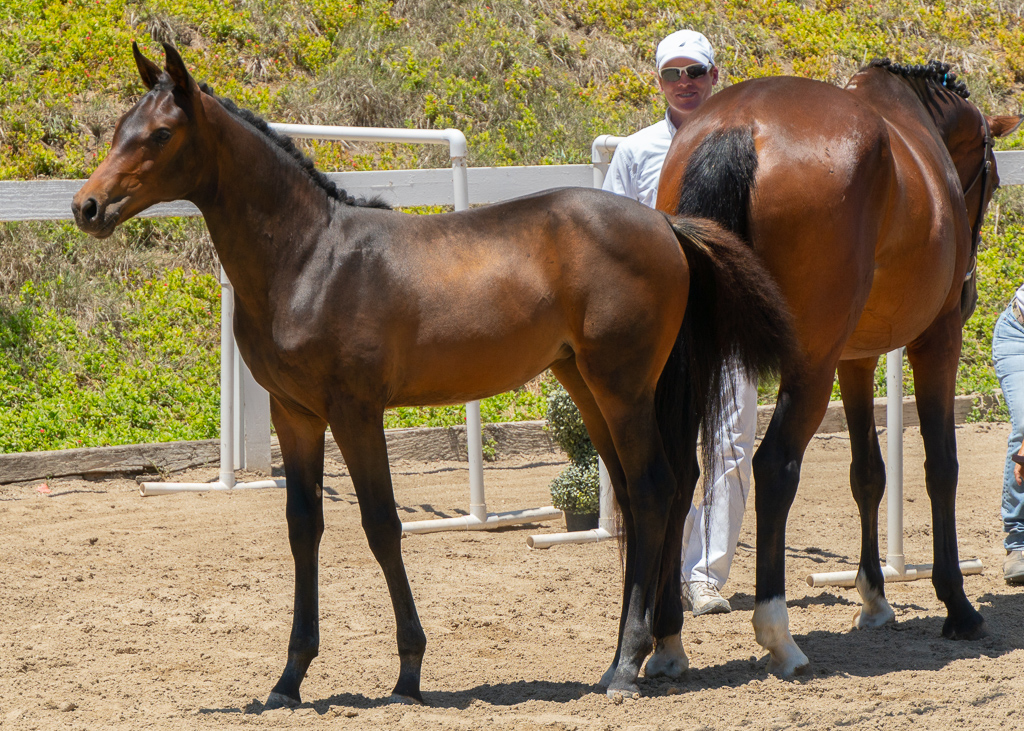
Mine had a habit of running around the ring or crashing through the portable railings to visit with me. This was frowned upon but I thought it was funny.
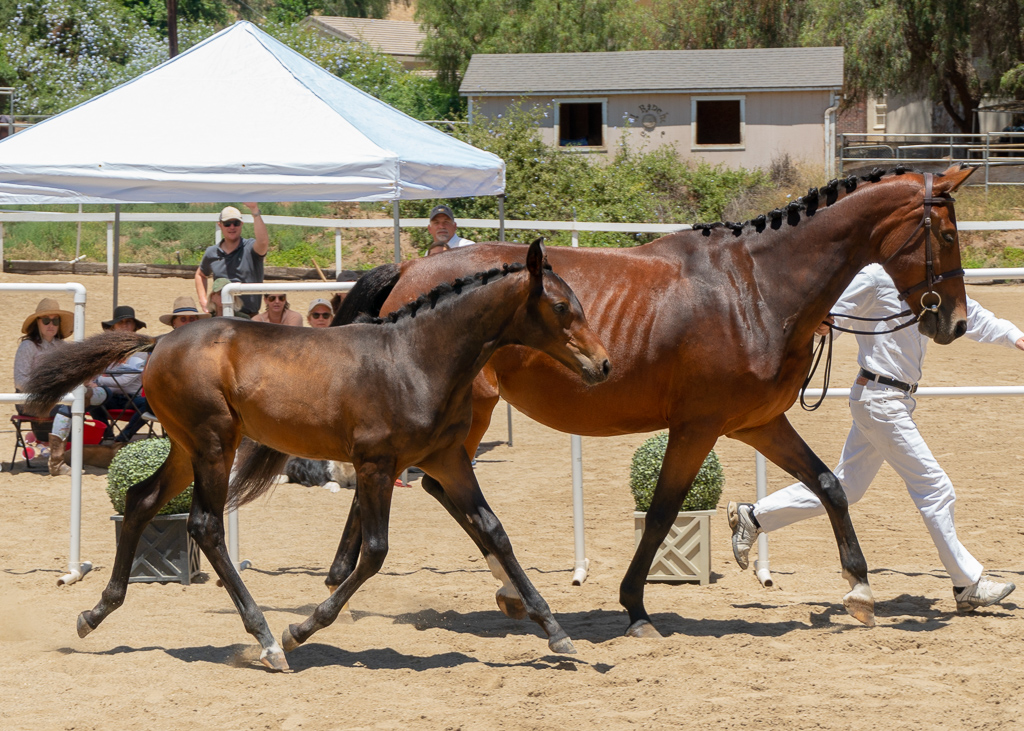
The foal has to trot long enough to be evaluated. Ideally that is the length of the arena. In reality the Inspectors take what they can get: sometimes only a couple of strides.
This is not an exact science.
Next, the foals have to stand so the clipboard guys can walk around them to appraise their conformation. Remaining still around strangers is not always a thing for foals. Moving around and leaping in the air happens. A lot.
Eventually, the Inspectors leave the ring to confer with one another. Eventually the judges pick up a ribbon. They then address the crowd and announce whether the foal is Elite, Premium or, gasp, unrated.
Cooper became an Elite foal. His bio mother was a Premium, and the judges strongly urged that she be used as dressage broodmare. (Huh? She was a 1.30 jumper back in Germany.) Layla was a Premium foal. They told me they liked her confirmation, loved her trot and didn’t like her walk. Which is fine. As a hunter, she shouldn’t be walking much in the ring.
Then it is over. Braids are pulled and the horses all go back to their field. The babies pass out. It is a big two days for them.


As usual, LOVE how descriptive your writing is! Feel Ike I was there!
LikeLike