I got a package from Amazon the other day. It was the size and shape of one of Bob Dylan’s autobiographies, but it wasn’t. Tucked inside the box, surrounded by bubble wrap was a small package, about the size of a pack of cigarettes. Inside that were eight blue plastic egg, each the size of a jelly bean.
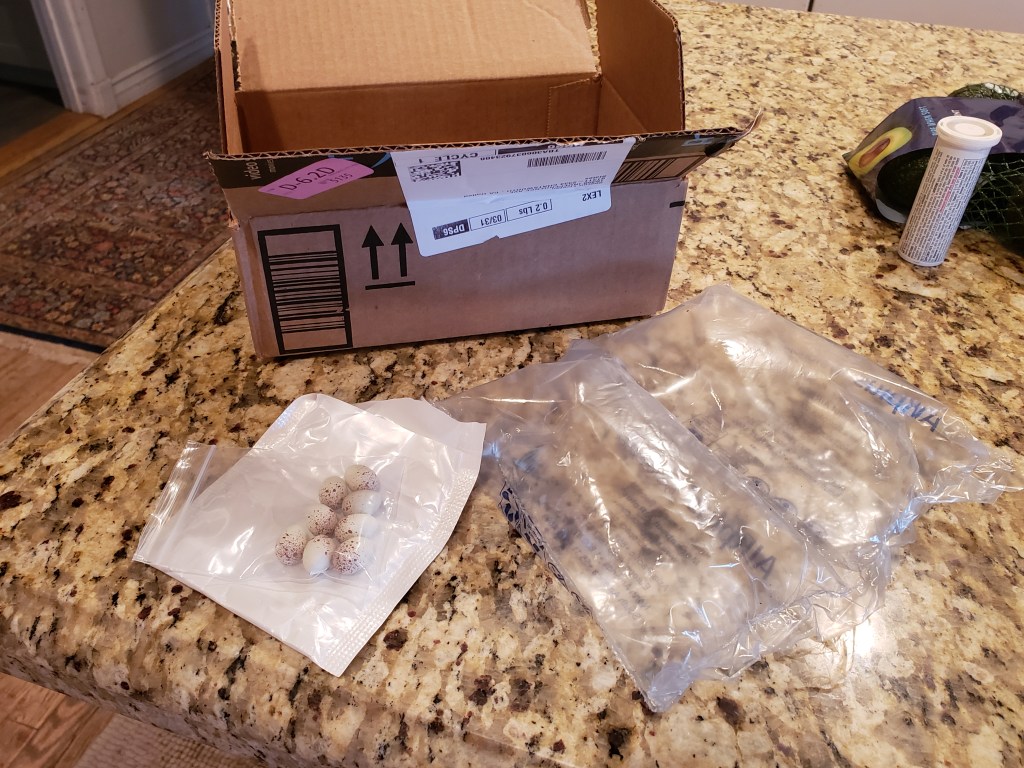
This isn’t a story about the wastefulness of Amazon packaging; that’s for another time. The eggs came from Amazon, because that was the only place I could find dummy eggs for my canaries.
That sentence contains a lot to unpack. Let me start from the beginning.
Most people don’t know that I really like canaries. I do. A lot.
I got my first one at a department store’s pet department when I was about six. I’ve had at least one canary ever since.
One of the first things I did when I moved to across the country and settled in North Hollywood with Keeper the dog, Catcher the cat and Herbie the eight-inch goldfish was purchase a canary bird and a cage.
Some people love parakeets. No judgement here. Parakeets are super cheerful, friendly and attractive. I think of them as the Golden Retriever of pet birds. They are easy, people pleasers and live a long time.
They are great birds; I just don’t want one.
Canaries are a little trickier. They are a bit high strung, mostly indifferent to people and often delicate.
But the thing is, they sing. Like seriously SING! Both sexes warble, but the females tend to be a little more nuanced, trill-ier. The males have powerful, showy voices. Think Taylor Swift vs. Mick Jagger.
All of them sing along with other music.
Back in my music critic days, my canaries were particularly fond of metal. They didn’t care if it was good, like Metallica, or god-awful crap from that Christian band that dressed in yellow and black stripes like demented bumblebees. (Stryper maybe?) It didn’t matter. My birds would start belting it out as soon as it the music began.
At some point I had a four-foot flight cage built and filled it with a lot of gorgeous birds. There were a mix of males and females. I picked the males for their voices and females because they were pretty. (Yes, I am an avian sexist.) I had yellow ones, orange ones, green ones and even a white one and a few with little feather hats called Glosters.
I left them alone to do what birds do, which meant in addition to singing, some of the females got broody and built themselves a little nests in their food bowls until I bought them real nests. Then they’d lay eggs.
I am convinced that it is a miracle that the canary species exists. Canaries don’t have an abundance of parenting skills.
The females would lay an egg or four and dutifully sit on them for a bit. But, more often than not, when the hen flew off to eat, she’d blithely knock the egg to the ground.
Splat.
Occasionally a miracle chick would manage to hatch only to end up knocked to the ground overnight. That was sad. The hens never cared.
I did have one baby hatch and manage grow to be an old canary. I named it Tweedy after Jeff Tweedy. Tweedy outlived all the rest of his family and died at the ripe old canary age of eight.
Then I took a bird break. I maneuvered the cage out of my bedroom and put in the barn for storage.
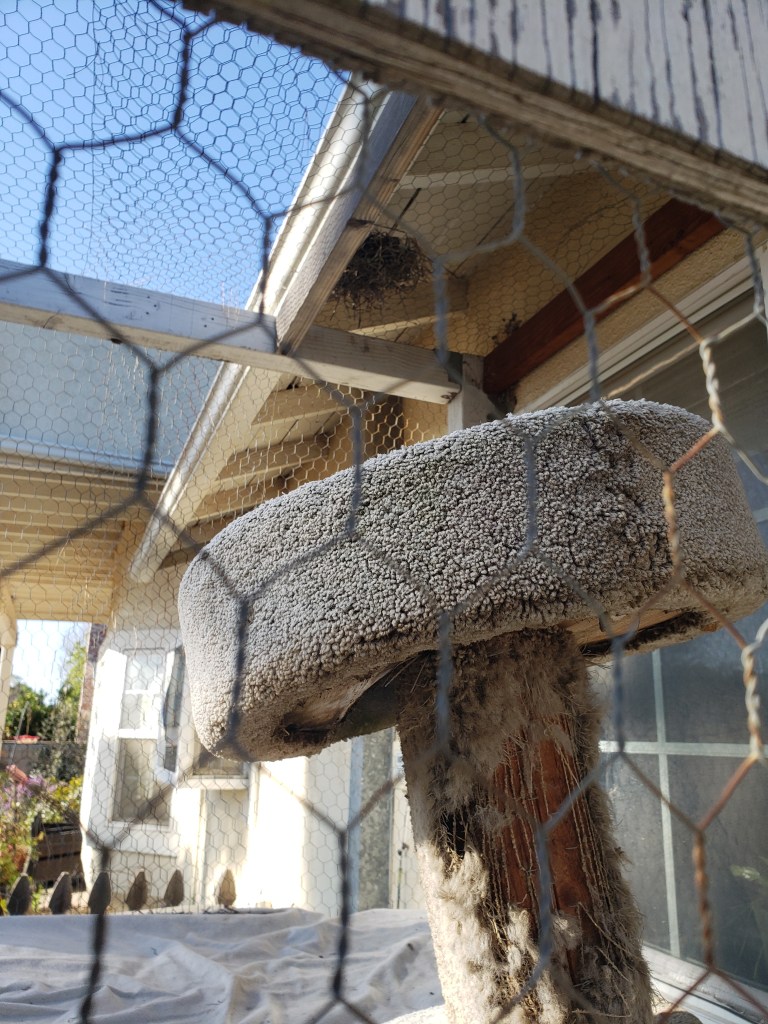
I missed the canaries, but I made up for it by obsessively feeding the pack of hummingbirds that frequent my yard, and watching the sparrow that vindictively nested on the top of Tilly the Cat’s Catio.
I didn’t’ think much about canaries for a few years.
Until this fall when I walked into my local feed store where a magnificent canary was singing his heart out. He took my breath away.
It was a cold wet day and not ideal for transporting a canary. I decided to wait, and if he was still there the next time I came in, he’d be mine.
Who was I kidding?
As soon as I got home I dragged the cage into the yard, scrubbed it down and set it up back in the bedroom. Two days later I returned to the feed store.
The bird was gone.
It was a minor setback. I was on a mission. I drove across Los Angeles to the bird store that decades earlier had built the cage for me. They had canaries. Dozens and dozens of them.
Sigh.
I stood around for about a half hour trying to catch some of them singing over the din of the screeching Parrots.
It was hopeless.
Eventually I picked out three that caught my eye. I knew one was a female, but she was so pretty and sweet I couldn’t resist. The other two were guaranteed to be male. (The males are always guaranteed. If they don’t sing you can return them. Like that ever happens. What kind of monster returns a pet?)
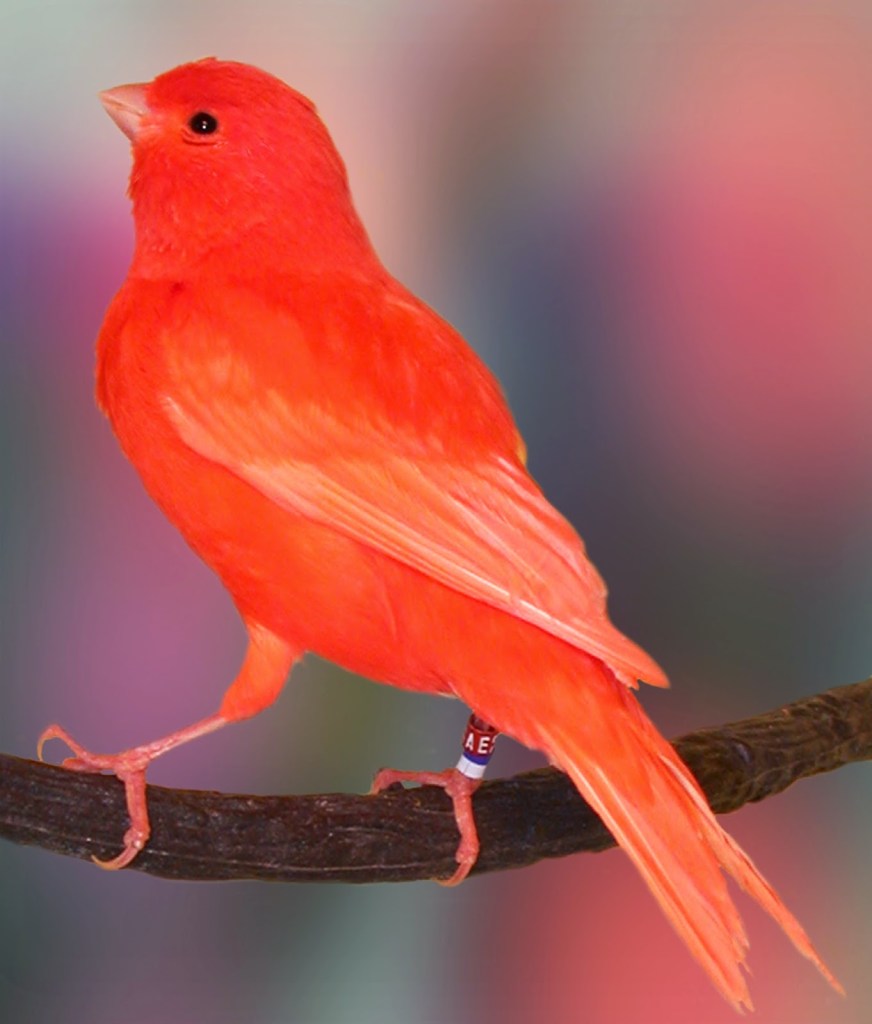
Two were bright yellow, the friendly female I named Adele. The other had a dashing grey spot over its eye so he became Spot. The third was a red Gloster with feathers on its head that looked like a red beret, so naturally he became Prince.
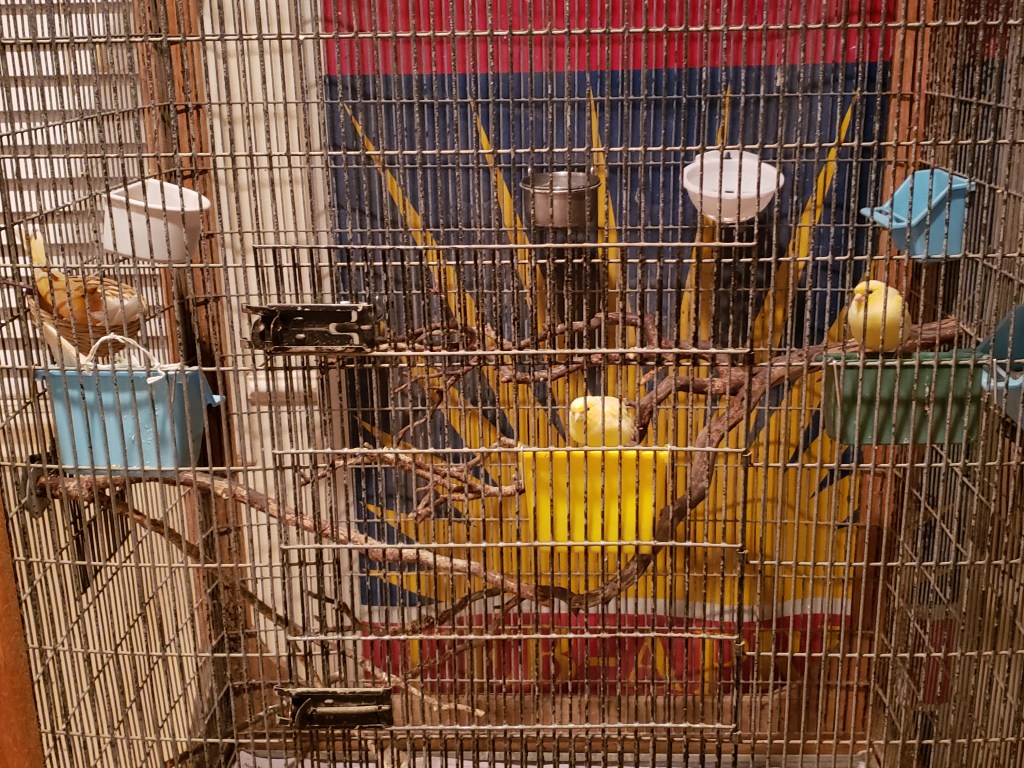
All was quiet for a while. Literally. None of the boys were singing, but Adele had a pretty little whispery song.
She also had a number feather cysts, which meant I took her to an avian vet. Since she is a tiny bird, there was a good chance she’d die at the vet office, but I figured if I didn’t take her she would definitely die. The vet surgically removed the cysts, and told me they’d probably return and she still might die.
No one told Adele. Her tail feathers remain scraggly, but the cysts have not come back and she still sings.
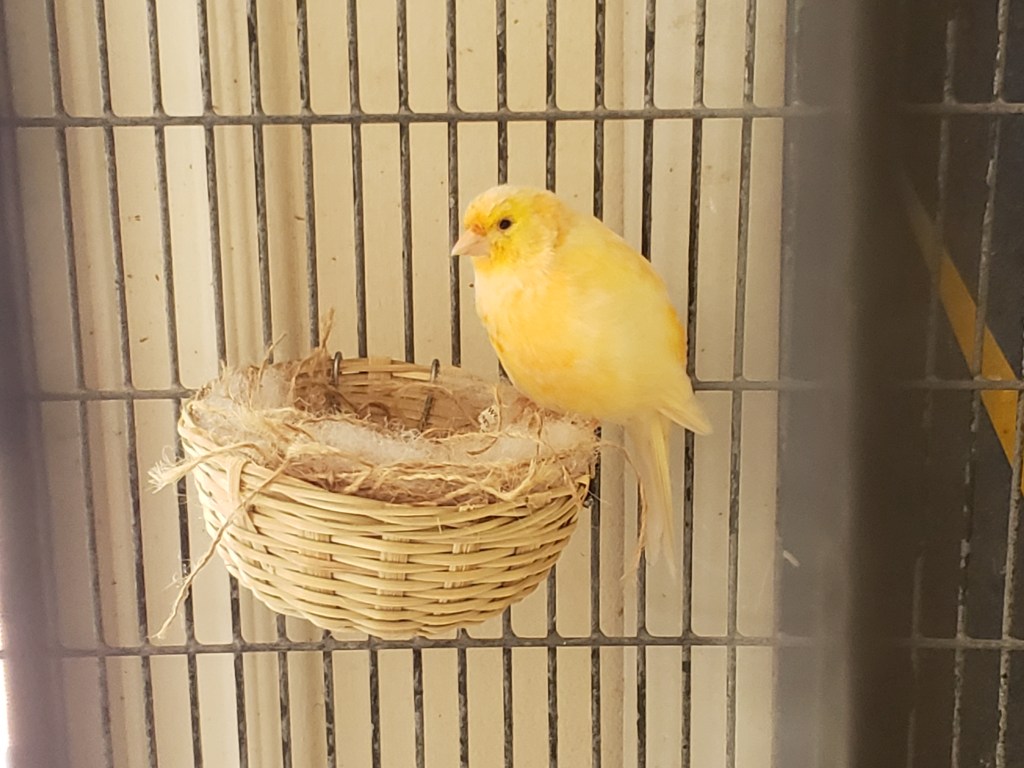
With the arrival of Spring both Adele and Prince, who was absolutely not male, became broody. Prince is quite the little nest builder. Using strips of burlap, torn tissues and feathers, she built nests that the Princess on a Pea would find restful.
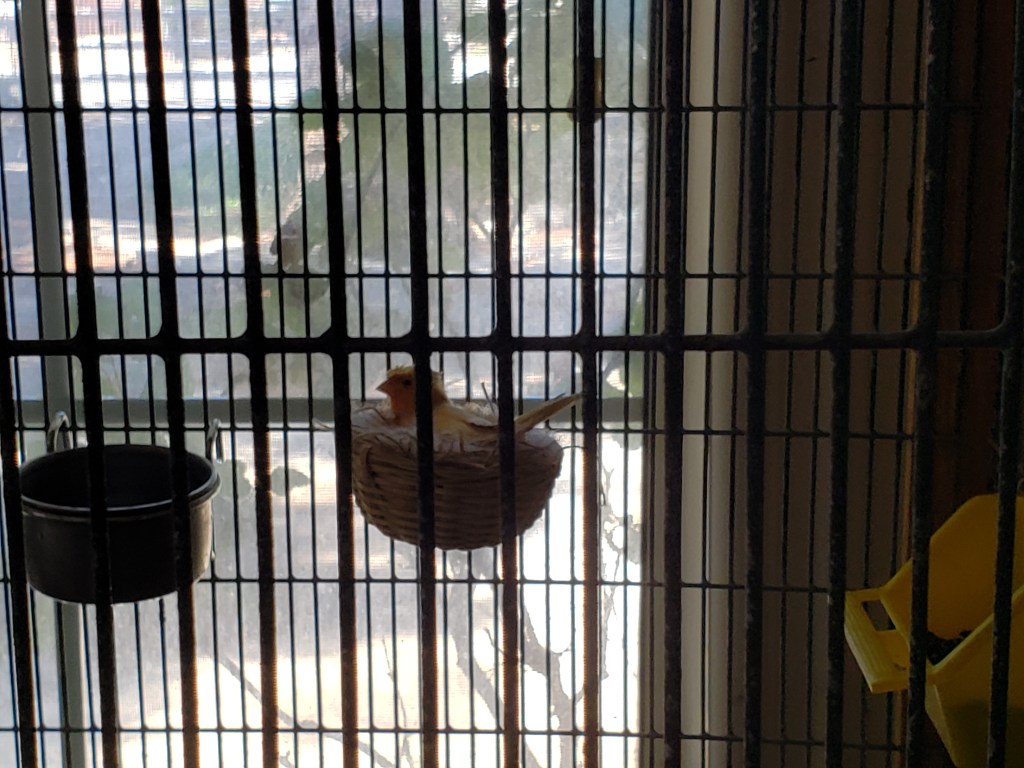
Prince filled the nest with tiny blue eggs. The first batch didn’t hatch, so I removed them. She promptly laid some more.
Apparently canary hens aren’t territorial. Adele prefers using a food container as a nest, but she isn’t fussy about using the same container. The girls regularly play musical nests. Sometime Adele sits on Prince’s nest, and Prince occasionally tucks herself into Adele’s feeder.
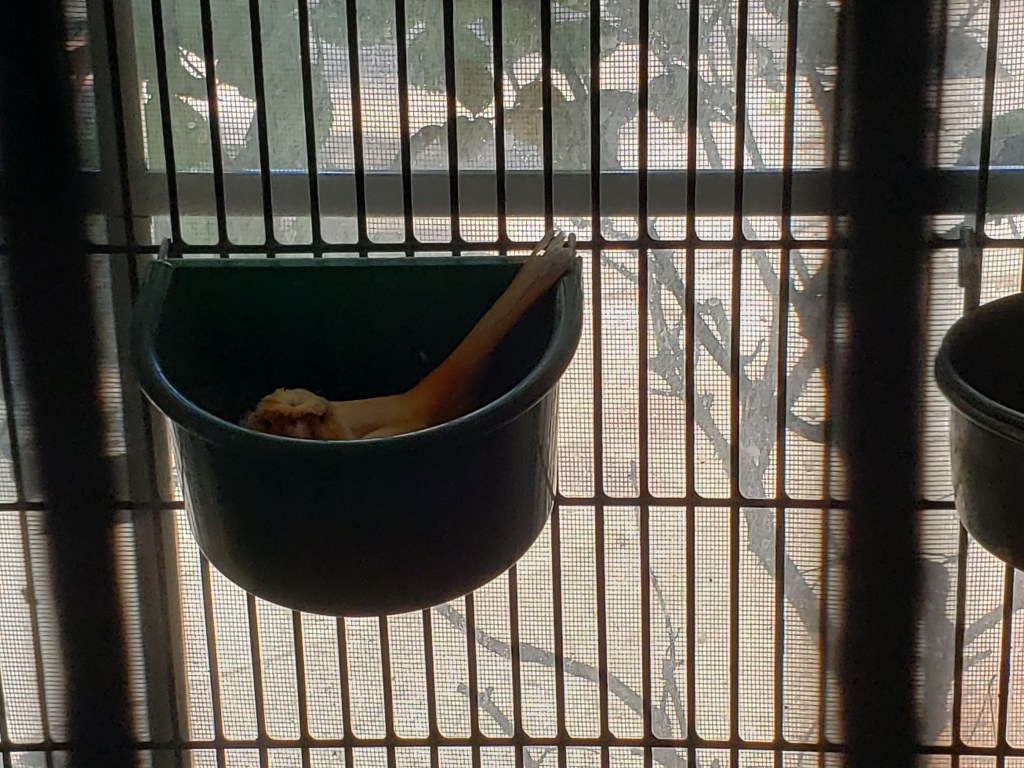
All the experts recommend taking the eggs away when they are laid and replacing them with fake eggs until there are four eggs in the nest. If the fakes remain in the nest, the bird will stop laying. If you want chicks, you put all the real ones back. Or so they say
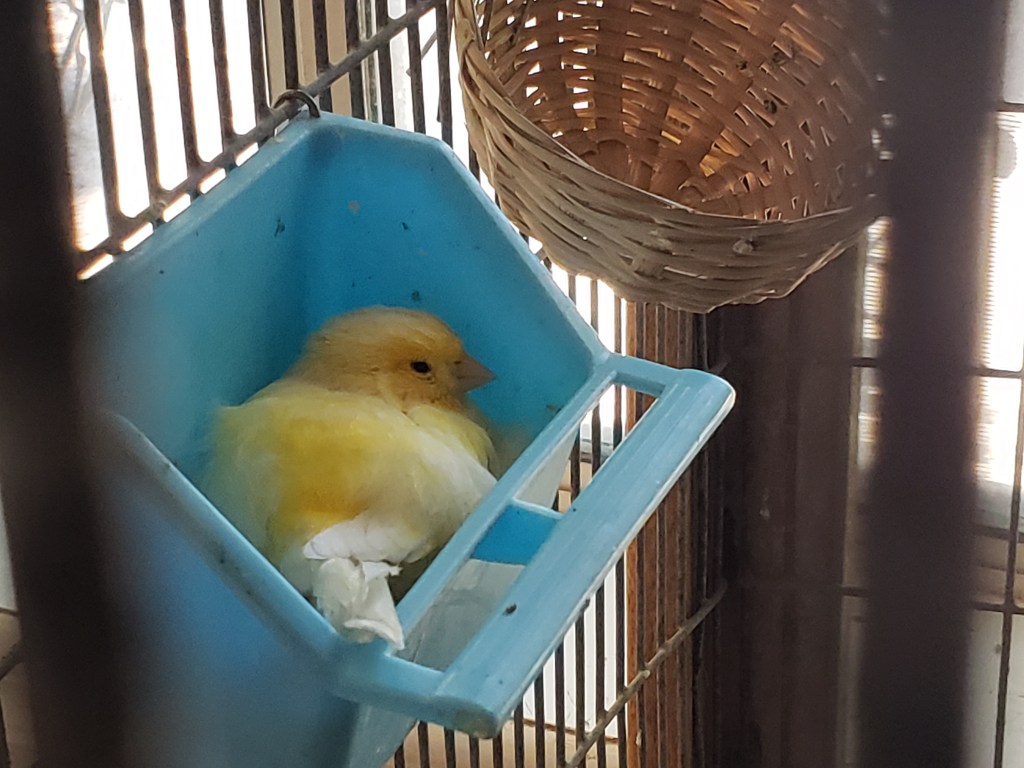
This brings me to the over-packaged eggs that arrived the other day. Your average Petco doesn’t even carry canary food, much less dummy eggs. Hello Amazon!
Yesterday I removed Prince’s eggs while the hens were eating their snacks and slipped in the plastic eggs. Neither bird seemed to notice that jelly-bean sized eggs weren’t real. I figure either I’ll have some baby birds, or at least happy broody hens. I don’t really care.
Meanwhile the wild birds are busy; the sparrow that nests on top of my Catio is back. She is driving Tilly crazy, and it will get worse when the sparrows hatch, which since they aren’t canaries, they will. Last year there were two sets of four.
No dummy eggs required.